
“Among the dead were dozens upon dozens of children between 2 and 15 years old, women and old people, in most cases shot at point blank range in the head. The position of the bodies indicated that the people had been killed in cold blood, calculatedly, without any sign of a struggle or of having tried to escape. Some had been taken aside and shot singly; many had been killed as whole families at once. Some corpses displayed several wounds, one of which was invariably to the head, suggesting that the wounded had been finished off. Some children were found with severed ears; the skin had been cut from the left side of an elderly woman’s face; and men had been scalped. Some corpses had been robbed”.
Chingiz Mustafayev, an Azerbaijani journalist, was among the first to document the Khojaly Massacre. He recorded horrifying scenes of dead bodies, mutilated civilians, and mass killings. His footage, captured alongside an international crew, became key evidence of the tragedy. The Khojaly Tragedy happened on the 26th of February, 1992, during the Nagorno-Karabakh War between Armenia and Azerbaijan. Armenian forces, with help from Russian troops, attacked the Azerbaijani town of Khojaly, killing hundreds of civilians. Many were brutally murdered, and others froze to death while trying to escape. This massacre worsened the conflict, deepening hatred and fueling the war. Azerbaijan calls the tragedy genocide, while Armenia continues to deny responsibility, with President Serzh Sargsyan describing it as an act of revenge to ‘break stereotypes’. Some countries, such as Scotland, have recognised the massacre. The tragedy remains a painful and controversial issue in the region today. Goltz describes the horrors of the attack, the suffering of Azerbaijani civilians, and the aftermath of the massacre. Goltz provides firsthand accounts and details from survivors and journalists who witnessed the events, including Chingiz Mustafayev’s footage.
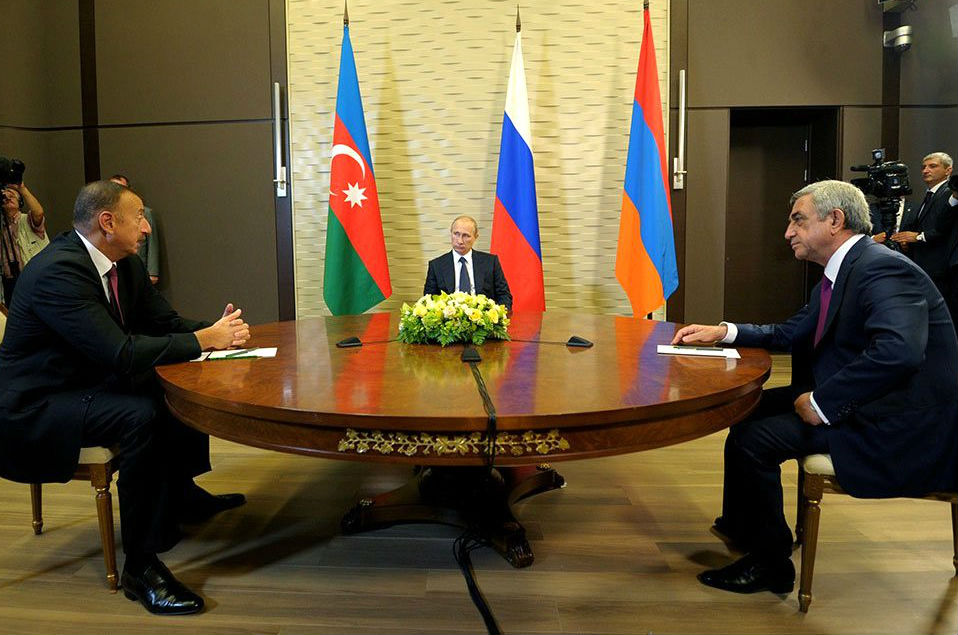
The Karabakh conflict between Azerbaijan and Armenia has been one of the most enduring and contentious disputes in the Caucasus region since 1988. Over nearly three decades, multiple diplomatic efforts attempted to resolve the conflict, with the OSCE Minsk Group playing a central role in mediation. However, despite extensive negotiations and summits, the Minsk Group failed to achieve a lasting peace, culminating in the Second Karabakh War in 2020. This article explores the shortcomings of the Minsk Group, the factors that contributed to its ineffectiveness, and the broader implications for international mediation.
The Role of the OSCE Minsk Group
Initially, it is necessary to understand the mandate and structure of the Minsk Group. Established in 1992, the Minsk Group was tasked with facilitating negotiations between Armenia and Azerbaijan under the auspices of the Organisation for Security and Cooperation in Europe (OSCE). It included 11 participating states, with Russia, the United States, and France serving as co-chairs. The group sought to mediate peace through diplomatic channels, ceasefire monitoring, and summit-led discussions.
Nonetheless, challenges soon emerged. Despite its ambitious mandate, the Minsk Group’s ability to enforce agreements was limited. Over the years, its interventions were characterised by delays, a lack of concrete enforcement mechanisms, and perceived biases among mediators. The failure to secure substantial progress led to frustration and disillusionment, particularly from Azerbaijan’s perspective, which saw the diplomatic deadlock as an impediment to reclaiming its occupied territories.
Failures of mediation: Key factors
In addition, several factors contributed to the failure of mediation:
- Lack of pressure and enforcement
The Minsk Group was primarily focused on maintaining a fragile ceasefire rather than addressing the conflict’s core issues. While some agreements, such as the 1995 prisoner exchange, were achieved, the group lacked the authority to enforce broader resolutions. The inability to compel Armenia to withdraw from occupied Azerbaijani territories rendered negotiations ineffective.
- Bias among mediators:
Azerbaijan repeatedly criticised the Minsk Group for its perceived pro-Armenian stance. The influence of Armenian diasporas in France and the United States raised concerns about impartiality. French President Emmanuel Macron’s open support for Armenia during the 44-day war further undermined confidence in the group’s neutrality.
- Lack of inclusivity:
The negotiation process remained largely exclusive to official state representatives, without meaningful participation from Karabakh’s displaced persons or civil society organisations. This lack of broader representation weakened the legitimacy of proposed agreements and hindered sustainable peace efforts.
- Diplomatic stalemates and missed opportunities:
Between 1992 and 2020, numerous summits were held to propose settlement frameworks, including the Madrid Principles and the 1996 Lisbon Summit’s peace proposals. However, Armenia’s rejection of key agreements and the absence of mechanisms to enforce compliance led to repeated diplomatic failures. The lack of agreement on the sequence of peace implementation further stalled progress.
- Geopolitical complications:
Azerbaijan’s geopolitical position has long been influenced by historical conflicts, regional rivalries, and shifting global power dynamics. The Second Karabakh War (2020) marked a turning point in the region, reshaping alliances and reinforcing Azerbaijan’s strategic role in the South Caucasus. This victory altered the balance of power in the region and positioned Azerbaijan as a key player in the Caucasus. By liberating its occupied territories, Azerbaijan also strengthened its global standing. While Azerbaijan’s relationship with Turkey deepened, its ties with Russia remain cautious, with Baku strategically managing its diplomatic stance to avoid confrontation. Furthermore, Azerbaijan positioned itself as a key player in Europe’s energy diversification efforts and reduced European dependence on Russian energy through the expansion of its economic and energy ties with the European Union. As the regional power dynamics continue to evolve, Azerbaijan remains at the centre of the South Caucasus’ geopolitical chessboard, balancing alliances while safeguarding its national interests.
The Path to war: From diplomacy to conflict
As a result of these cumulative failures, the path to renewed conflict became increasingly evident. The failure of the Minsk Group to secure a lasting peace created conditions for renewed conflict. The 2016 Four-Day War and the Tovuz clashes in July 2020 signaled rising tensions. Azerbaijan increasingly saw military action as the only viable option to reclaim its territories, given the long-standing failure of diplomatic efforts and the continued occupation of Nagorno-Karabakh despite international calls for withdrawal. The outbreak of the Second Karabakh War in September 2020 was a direct consequence of diplomatic deadlock. The Minsk Group’s inability to act decisively during the conflict further highlighted its diminishing relevance. The war concluded with Azerbaijan’s decisive victory and the signing of a Russia-brokered ceasefire agreement, effectively bypassing the Minsk Group’s role in future negotiations.
Azerbaijan increasingly viewed military action as the only viable solution to reclaim its territories, particularly after Prime Minister Nikol Pashinyan’s statement, “Karabakh is Armenia, and that’s it,” in Khankendi, Karabakh, on August 5, 2019. The outbreak of the Second Karabakh War in September 2020 was a direct consequence of the diplomatic deadlock. The Minsk Group’s inability to act decisively during the conflict further highlighted its diminishing relevance. The war concluded with Azerbaijan’s decisive victory and the signing of a Russia-brokered ceasefire agreement, effectively bypassing the Minsk Group’s role in future negotiations. Russia sidelined all negotiators on the ground by deploying its peacekeepers in Karabakh, although the Minsk Group Co-Chairs released a statement calling on Armenia and Azerbaijan to fully implement the commitments they undertook on November 9, 2020.
Post-war developments and current negotiations
Following the cessation of hostilities, further developments unfolded. Immediately after hostilities ceased by the agreement, Armenia evacuated three towns surrounding Nagorno-Karabakh. However, the implementation of the rest of the ceasefire agreement stalled, including disarming Armenian separatists and the withdrawal of Armenian regular troops. Their presence was acknowledged by the Secretary of the Security Council of Armenia, Grigoryan, in 2022. Once again, the lack of progress spilled into a day of conflict in 2023 with anti-terror operations, resulting in the restoration of Azerbaijan’s full sovereignty. A subsequent UN mission to Karabakh in October reported no damage to civilian public infrastructure, including hospitals, schools, housing, or cultural and religious structures.
The current state of negotiations
Transitioning to the present, the diplomatic landscape remains dynamic. Currently, negotiations between Armenia and Azerbaijan focus on the delimitation and demarcation of borders, with some progress being achieved. Discussions also cover transportation and communication corridors, including the Zangezur Corridor, which Azerbaijan demands unhindered transit between Azerbaijan and Nakhchivan, an autonomous exclave of Azerbaijan, in line with the ceasefire agreement. However, Armenia is only willing to establish a corridor under the same terms that Azerbaijan would enjoy on a planned railway via Iran. Additionally, discussions have focused on amending the Armenian constitution, laws, and regulations to remove claims to Azerbaijan’s territorial integrity, with Armenia expressing an intent to hold a constitutional referendum in 2027.
While there is cautious optimism regarding the negotiations, significant challenges persist. Armenia has significantly increased its arms purchases from France, including lethal howitzers, and India has become Armenia’s largest defense supplier. There are also reports of alleged drone purchases from Iran. Meanwhile, Azerbaijan is working to maintain its edge in the region through the continuous modernisation of its forces. Suggesting parties still assess the prospect of conflict as high.
Lessons for International Mediation
In light of these developments, there are several critical lessons. The Minsk Group’s failures underscore critical lessons for future conflict resolution efforts:
- Enforcement mechanisms are essential: Mediation bodies must have the authority and means to enforce agreements to prevent prolonged deadlocks.
- Impartiality is key: Perceived bias can undermine trust and render peace efforts ineffective.
- Inclusion of all stakeholders: A comprehensive peace process must involve affected communities, not just state actors.
- Adaptability and Proactivity: Diplomatic initiatives should be proactive in addressing tensions before they escalate into conflict.
In conclusion, the Karabakh conflict illustrates the limitations of international mediation when enforcement, impartiality, and adaptability are lacking. The OSCE Minsk Group’s failure to resolve the dispute ultimately contributed to the conditions that led to war. Moving forward, international organisations must learn from these shortcomings to develop more effective approaches to conflict resolution in similarly protracted disputes. Today, Azerbaijan seeks peace both in the region and within its borders. This raises critical questions about the role of international organisations like the OSCE: Did the OSCE Minsk Group ever have the real authority to enforce a peace agreement, or was it designed to fail from the start? To what extent did geopolitical interests among Minsk Group co-chairs (France, Russia, and the U.S.) compromise the neutrality of the mediation process?

 PolSoc Paper