
It’s not every day that you find yourself on a train at 7am, heading down to the Capital after risking your life on Sheffield’s icy hills. I’m carrying a bag that’s heavier than I would like, yet nowhere near as heavy as the weight of stress that has set in. Today was the day. I hopped on the Tube and ventured across town, the imposing Portcullis House marking the destination.
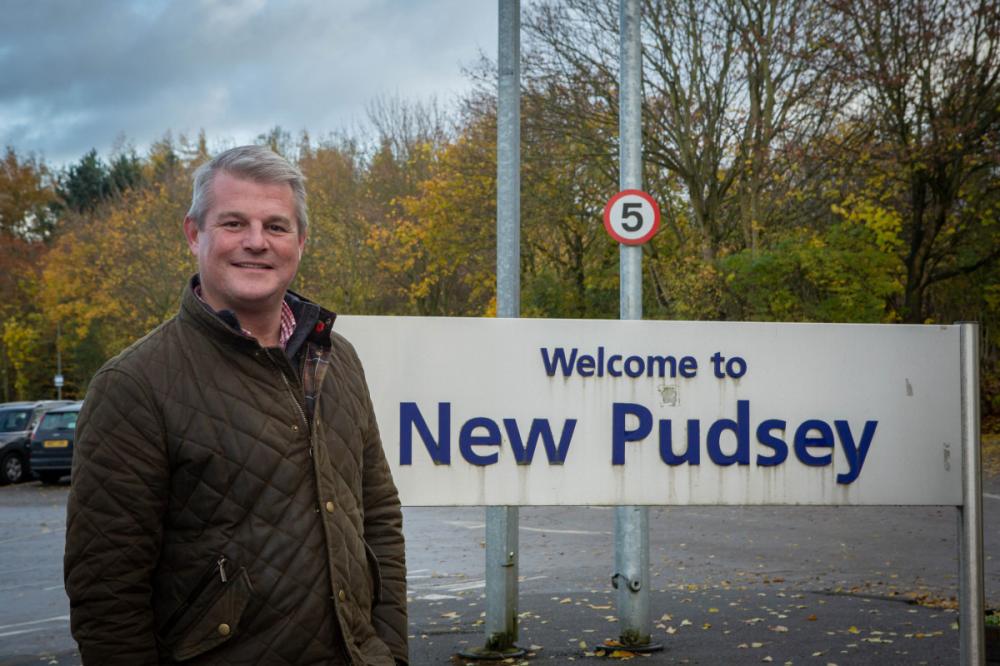
In the shadow of Big Ben, I passed by the great and the good as I was led towards the Houses of Parliament. John Glen, Rishi Sunak’s Paymaster General walks past. Lee Anderson, the first Reform UK MP sporting a flat cap. Passing Speaker’s House and walking through a maze-like arrangement of corridors, the door to my left reads: ‘The Rt. Hon. Robert Jenrick MP’. Suddenly, it all feels very real, and before I know it, I’m face-to-face with the Shadow Culture Secretary, the Rt. Hon. Stuart Andrew MP.
Stuart Andrew, despite no longer being in Government, is still a significant figure in the arts and cultural industries, his appointment to Kemi Badenoch’s Shadow Cabinet in November garnering much approval within the cultural and charitable sectors. He is one of the more Centrist members of the new Opposition, and still holds considerable sway in the wider sector, so the opportunity to interview him was impossible to pass up.
I’ve interviewed around a dozen people now, from some of the UK’s biggest West End stars, to playwrights and politicians. But this was the first sitting Minister or Shadow Minister I had ever spoken to, and to up the ante, the first in-person interview I had ever done. Having previously only interviewed via telephone and video call, I was presented with a unique challenge. Every reaction, flicker of emotion and every pause was immediately obvious. Conscious of the grandeur of his office, and the generations of parliamentarians who had passed through it, the pressure was certainly on.
Yet, for all of the pressure I was placing on myself, Andrew was a lovely interviewee: calm, collected, and genuinely funny. Discussing with him so many important issues, from culture and being in Opposition to LGBTQ+ and Trans+ rights, felt surprisingly reassuring. Whilst disagreeing with some of his answers, throughout the interview, Andrew explained his views in a way that showed a more thoughtful side that we rarely see of politicians from the few soundbites and interviews we are exposed to. His style could be best described as masterful, but measured; critical, but not combative.
So what did I discover from this very unique experience? Well, firstly, long-form, low-stakes interviews are needed so much more in modern political discourse. Get a senior politician in a room speaking to student media, and with the assurance that their testimony will not be on the front pages the next day, it is possible to peel back the layers, and start to see the person underneath. Yes, Andrew had key points against the Labour Government and his counterpart’s current plans, but it wasn’t resistance for the point of resistance. It wasn’t Labour-bashing because that is the job of a Tory frontbencher. Andrew’s answers were genuine, and it’s here that you start to see why many charities were welcoming his appointment in Opposition. If we want to begin to truly understand who the people are who are making the decisions at the top of our civil society, we need to give them the ability to show us.
Having interviewed Stuart Andrew MP, and conducted my first in-person interview, I feel I appreciate both his role, and the person who serves in it, far more than before. The opportunity for me, the editor of a random student newspaper in Sheffield with no professional journalistic experience, to interview one of the most significant figures in the cultural sector proves that there is an opportunity to do something that readers can really benefit from.
It’s here where student media can really play its role and serve a much greater purpose than many give it credit for. Whilst it will never replace the role that traditional media plays in holding politicians to account, I see no reason why student media cannot fulfil a function of allowing people to see beneath the party politics and understand who these people who represent us are. Since October, the Arts & Theatre section of Forge Press alone has interviewed five politicians associated with culture – three Culture, Media & Sport Select Committee members, its Chair Dame Caroline Dinenage, and now the Shadow Culture Secretary. Politicians are clearly willing to speak, we just need to let them!
 PolSoc Paper