
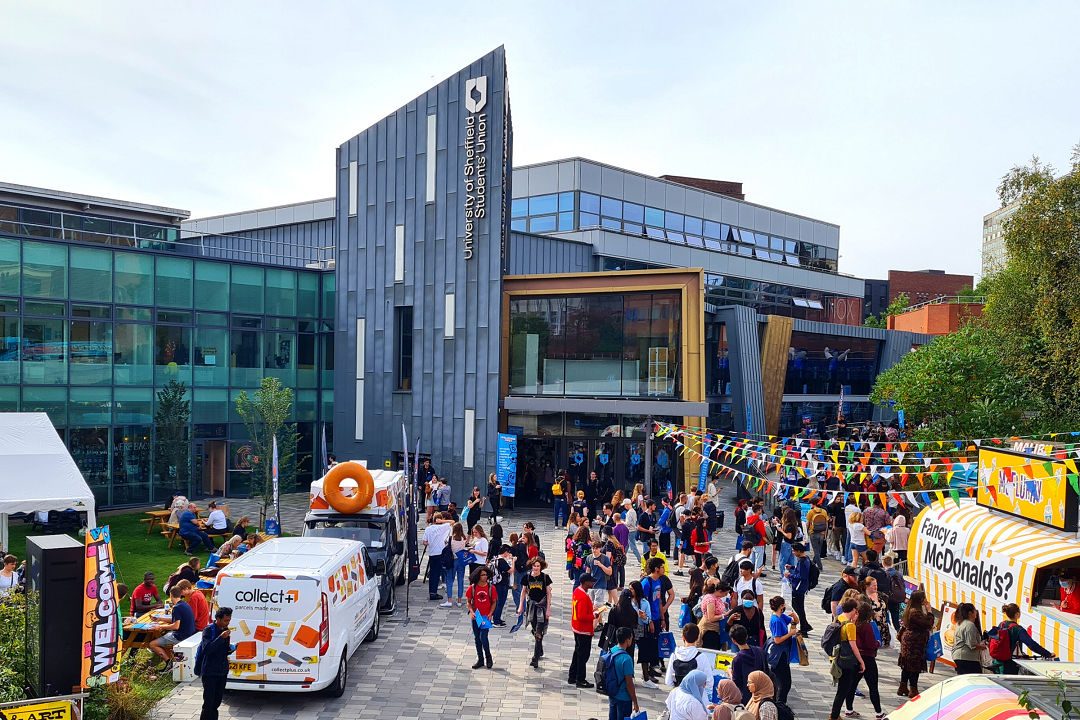
The rapid coming and going of the Students’ Union Officer Role Referendum took the majority of the student body by storm. In the space of one day, students went from not knowing the officer roles were being reconsidered, to being bombarded with neon posters and officer videos imploring students to vote in favour immediately. The Students’ Union and Officer Team went all-out, promoting the referendum on student night out pages and emailing society groups and sports clubs to get their members to vote.
Unfortunately for them, the referendum failed. While 250 votes short of the minimum number required for a referendum, from the votes they did receive, the motion would have failed anyway. Evidently a complete car crash for both the SU Officers and SU management, the referendum, and the way it was handled confirmed something feared by many – ‘democracy’ in the Students’ Union is failing.
Firstly, the Students’ Union Council is largely an obsolete body. As an SU Councillor myself, I have experienced just how disregarded the Council structure is. Years’ worth of policies, including my own from March, are sitting on the desks of the SU Officers, with minimal-to-no progress being made, and almost no communication. We are continually reassured that progress is happening behind-the-scenes, but given the extent of the backlog and the period that has elapsed since many have passed, this is hard to believe.
Considering the referendum itself, when it was decided what form of the policy would go to referendum (councillors were denied a vote on whether there should be a referendum at all), several councillors queried the proposed timeline. The SU bylaws state that “The Referendum shall be held not sooner than 12 days and not later than 22 days following the decision of the Students’ Union Council”, yet the timeline proposed saw voting open only eight days after the SU Council session. To this, Councillors were told by the SU Council Chair: “By-laws are interpreted by the trustees, who have agreed to this timeline and approved that it is within the bye-laws. The referendum is technically the day that voting closes, which falls within the 12-22 day period”. The SU by-laws exist to ensure that the SU functions by its own established rules. How long will it be before technicalities become overt ignorance of them?
It is also important to consider the campaigning strategies used in the referendum. It seems uncontroversial to expect that students be provided with an impartial overview of the referendum, and access to arguments both for and against the proposals. However, the extent to which the Students’ Union, and its Officers, utilised their own social media platforms, those of other SU bodies, such as the page dedicated to Nights Out, and the emphasis placed on how supportive the Officers all seemingly were of the proposals, you would be forgiven for thinking that everyone universally supported this proposal.
In a chat in the final days of voting, Welfare & Sustainability Officer Nadya Ghani told Councillors: “please exercise your democratic responsibilities and vote”, implying that our responsibility was to vote in a flawed referendum, rather than respond to it how we feel most appropriate, including non-voting. Meanwhile, those against it were provided with no significant platform or chance to share their grievances with the policy.
The most concerning development was yet to come. In the Council session immediately following the referendum, SU President Daisy Watson returned with a new policy: a proposal to remove Part-Time Officers and replace them with appointed ‘Liberation Facilitators’. The student body did not express support for this policy, and yet in the face of the referendum, and of democracy, it is making headway. So where are we now? This has effectively stifled meaningful discussion and engagement within SU decision-making. It appears as though the Students’ Union Executive Committee can advance policies as they please, aided by the Officer team, in spite of the feelings of the SU Council or the wider student body.
How do we move forward and remedy this? The entire democratic system needs to be reworked at the Students’ Union, and this needs to be done by regular students, not Councillors and certainly not by Students’ Union Officers and executives. Democracy at the Students’ Union appears set up in order to ensure its malleability to those running it. However, I believe that a better system is possible, where effective democracy is able to flourish in our SU. By reducing the power of the Officers and the Executive Committee, strengthening the role of SU Council and ensuring that regular students are at the heart of all levels of SU functioning, we can ensure that democracy operates effectively in our SU, and repair the abysmal state it is currently in.
 PolSoc Paper