
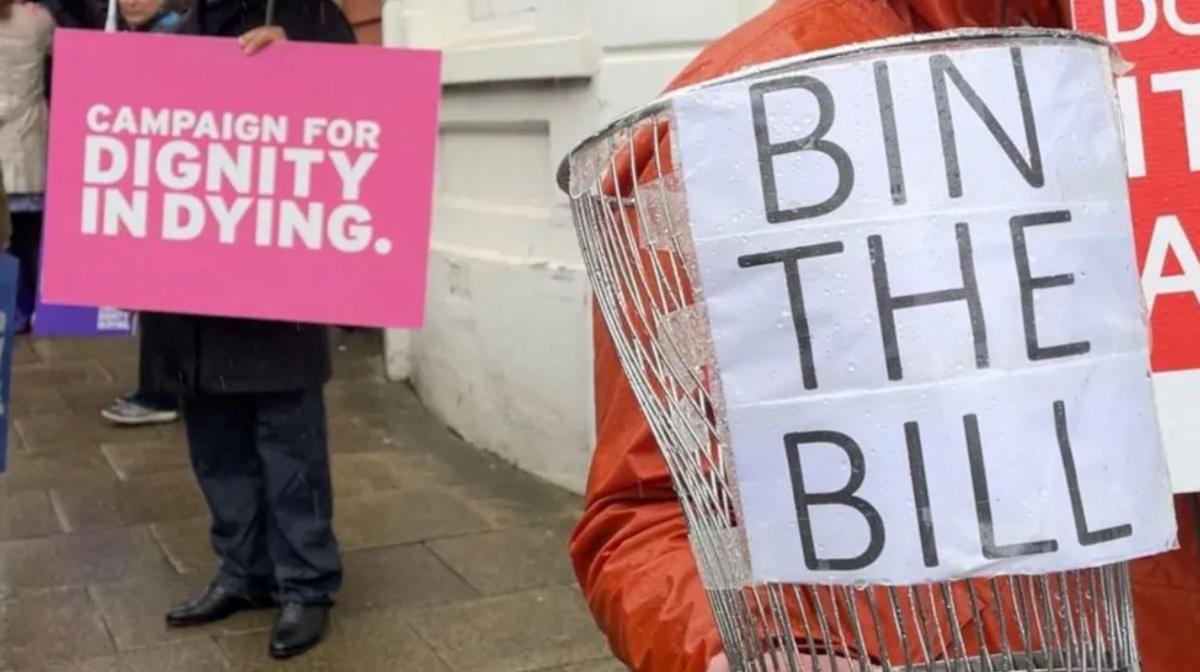
Last Friday’s Parliamentary debate on Kim Leadbeater MP’s Terminally Ill Adults (End of Life) Bill was an agonising and tough matter that divided the nation. Parliamentary parties and even MPs themselves, battled inner thoughts, there was intensive lobbying on both sides, and personal experiences amongst other factors made selecting a voting lobby so difficult.
The five-hour debate saw MPs from all parties come together to put their arguments to their fellow members, many of whom were undecided, in a Friday afternoon chamber that was packed way beyond the regular expectations of a Friday morning in the House of Commons. For many MPs, this vote was one of the hardest moments of their careers. And we need more votes like this.
When Leadbeater topped the ballot for Private Member’s Bills and announced that this would be the subject, the government was faced with two choices. The bill would be a popular one, so a decision would need to be made. They could either declare themselves for or against the bill, whipping any members present, or stick by the convention on matters of conscience, and declare a free vote. The government chose the latter.
By declaring the second reading of Leadbeater’s bill a free vote, there would be no official stance taken by the political parties, no whipping, and no overall opinion shared. This meant each MP was left to themselves to decide how they would vote, giving them the space to consult their constituents, think it through themselves, taking advice from concerned groups and many other sources that a regular whipped vote would not allow.
The five-hour debate was Parliament at its very finest – MPs of all stripes earnestly debating the issue, posing arguments for and against, and numerous considered interventions. The Government and Opposition front benches added their two cents to the conversation without dominating it, before voting began and MPs arrived at their final result. It was this example of Parliamentary democracy at its best that we need more of.
Being a free vote, there was no animosity or discourse based on party politics. There were no catchphrases blaming “the last 14 years”, or the Opposition trashing the entire concept, because it wasn’t one of their proposals. The debate also lacked the usual political point-scoring and belittling of perspectives simply because of whose they were. This vote represents ideal politics and arguably, how our system should be all the time.
When was the last time a bill got this much attention, started a national conversation or saw such depth of engagement from MPs with their constituents? When was the last time that an issue posed before Parliament brought together MPs from both the Reform MP and Green Parties, or hundreds of Conservative and Labour members? To say this bill briefly created a Parliamentary utopia is an understatement.
However, Britain’s party-centred political system will sadly ensure that votes like this are few and far between, despite the myriad of benefits brought by Private Members’ Bills. Without party politics, without the Whips, political debate flourished, and it is this ideal we should be striving for every day for our ‘Mother of all Parliaments’.
Is this idealistic? Yes. Could this be achieved in the long run? Absolutely not. Yet, no one could deny that last Friday’s vote opened the eyes of the nation to what debates and political discourse could look like and what they could lead to. Perhaps then, it is time to embrace the Private Members’ Bill.
 PolSoc Paper